
Originally posted on 10 January 2022
Note: This post discusses content in a previous platform (2022). Please refer to our latest platform for our defence position for the upcoming election.
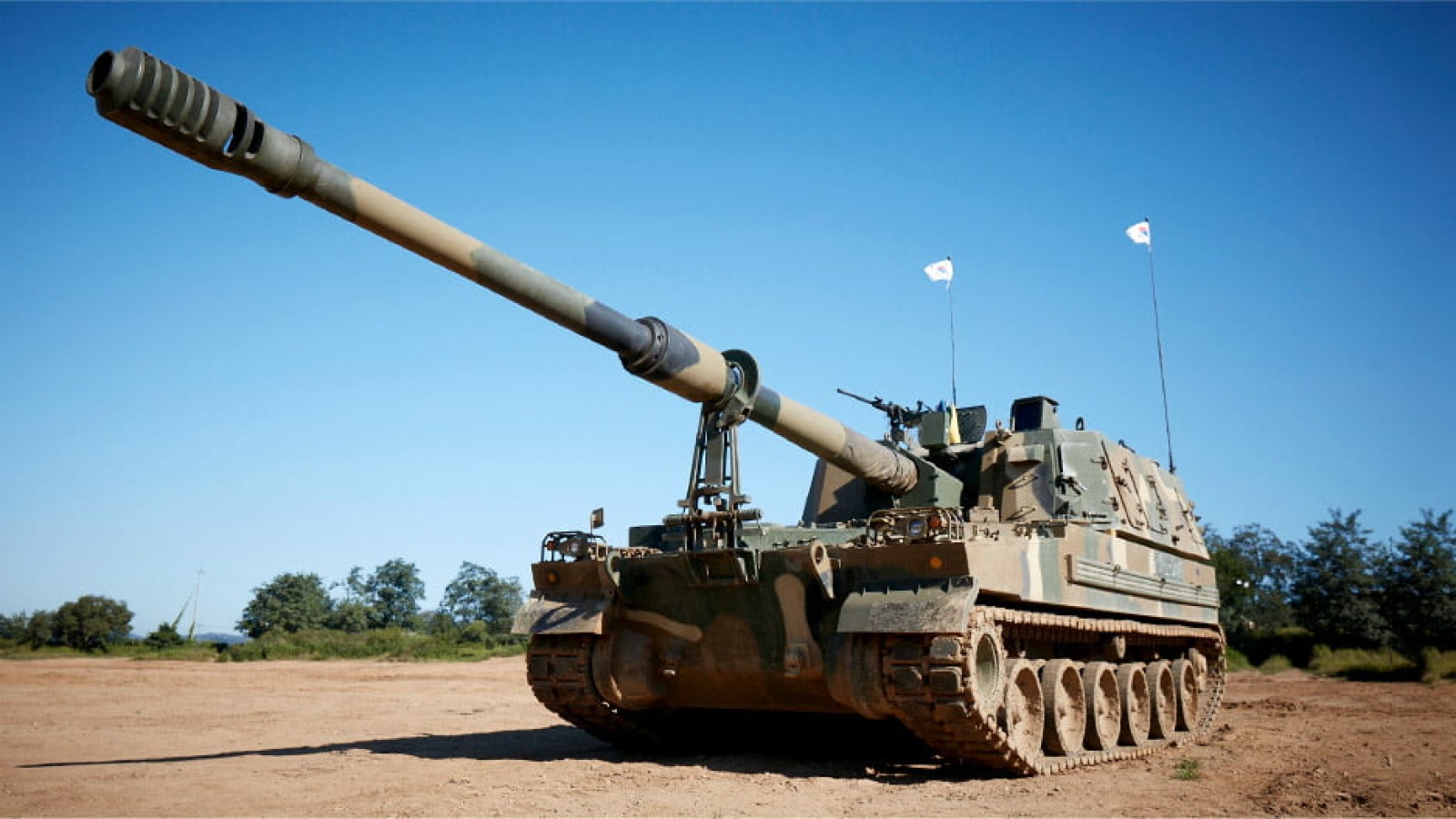
Despite the withdrawal of all allied forces from the middle east and now Afghanistan, the government still plans to spend billions on even more armoured vehicles. If the government didn’t use tanks in Afghanistan, where would they use them?
- Tanks could not be used anywhere in the pacific as they are too hard to deploy and would break all the roads.
- Tanks have not been deployed by Australia since the Vietnam war.
- Tanks are a bad way to defend Australia – why wait till an enemy has landed before engaging it with our tanks?
All these locally built tanks are more about fighting elections than fighting wars.
Marcus Hellyer summarises these purchases in a handy table in this ASPI article. We have reproduced the table below with added links and a weight column.
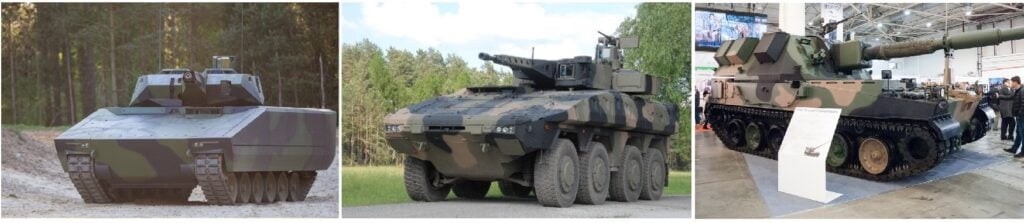
Lynx infantry fighting vehicle, Boxer combat reconnaissance vehicle and K9 Thunder howitzer
| Capability | Number of vehicles | Budget ($Billion) | Weight each (Tonnes) | Status |
| Boxer combat reconnaissance vehicle |
211 | 5.768 | 38 | First tranche of 25 delivered from Europe. Local production commencing in 2022. |
| Infantry fighting vehicle | 450 | 18-27 | 25 | Selection process underway. |
| M1A2 tank | 75 | 3.5 | 74 | Australia commits to purchase (10 Jan 2021). |
| Assault breacher vehicles | 29 | With above | 58 | As above |
| Assault bridges | 17 | With above | 62 | As above |
| Self-propelled howitzer & resupply vehicles | 90 | 4.5–6.8 | 47 | Restricted request for tender issued to Hanwha for the K-9. |
| Total | 873 | 32–43 |
We propose that new defence spending is channelled towards what’s needed to defend Australia:
- Long range aircraft such as the stealthy B21 instead of vulnerable and expensive frigates
- Off-the-shelf fuel cell submarines such as the Scorpène or Type 214 instead of hugely expensive nuclear submarines
- Medium range anti-ship missiles instead of tanks
This force structure would be more capable of defending Australia from the serious threats we now face – and far cheaper than tanks, frigates and bespoke submarines.
Reference
- Tanks are only the tip of an impending $40 billion capability iceberg (Dr Marcus Hellyer, ASPI, August 2021)
- Tanks and the ADF capability calculus (Andrew Davies, ASPI, July 2021)
- Australia’s new tanks are overkill and overweight (Declan Sullivan, ASPI, Jun 2021)
- Australia commits to $3.5 billion tank purchase from the US (The Age, 10 Jan 2022)